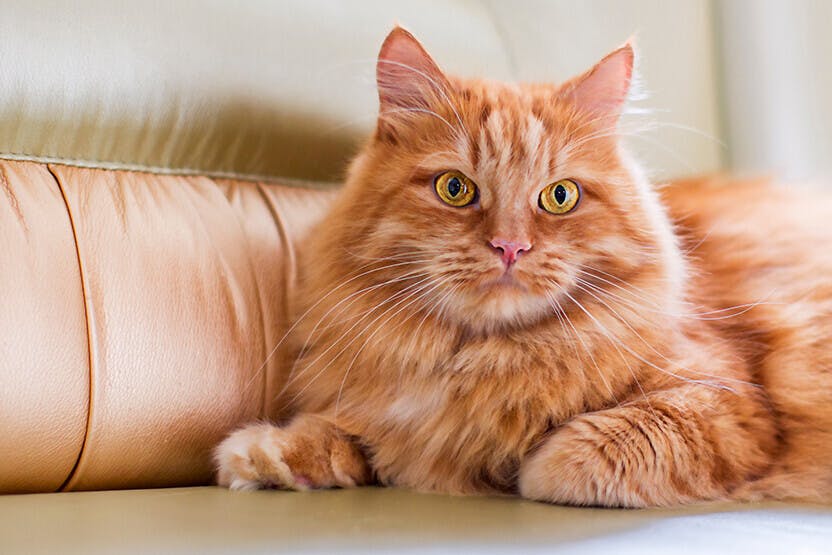
About 80 percent of orange cats are male due to genetics. The orange coloring comes from a gene located on the X chromosome, which influences the production of pigments in a cat’s fur. Males require only one copy of this gene from their mother to appear orange, while females need two copies—one from each parent. Because of this, male orange cats are much more common, while orange females remain relatively rare.
Orange cats, often called ginger or marmalade cats, owe their bright coats to the O gene. This gene converts the typical dark pigment in feline fur, called eumelanin, into a reddish-orange pigment known as pheomelanin. The placement of this gene on the X chromosome means its expression depends strongly on a cat’s sex chromosomes.
Male cats have one X and one Y chromosome (XY). If their single X chromosome carries the O gene, they will be orange since they have no second X chromosome to counter the trait. Female cats, with two X chromosomes (XX), must inherit the O gene from both parents for the orange color to show across their entire coat. If only one X chromosome carries the orange gene, the result is a coat with patches of both orange and black—commonly known as the tortoiseshell or calico pattern.
The Genetics of Ginger
- Orange fur is not linked to a specific breed, but is a genetic trait.
- Female orange cats are rare, while males are far more common.